Sunday, October 18, 2009

Spiced Tomato Chutney


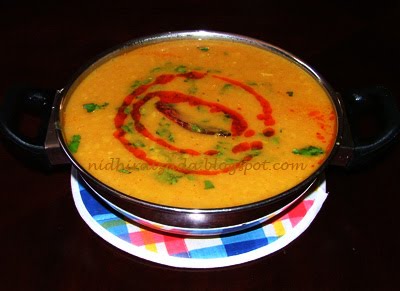
This spicy tangy chutney is made with sautéed red tomatoes, green chilies, garlic and curry leaves. Ajwain (carom seeds) gives it a different flavor.

Ingredients:

  • 4 red Tomatoes
  • 5-6 pods of Garlic
  • 1 tsp Ajwain (carom seeds)
  • 1 tsp red chili powder
  • Pinch of Asafetida
  • 10-12 green chilies chopped
  • 10-12 curry leaves (available in Indian Grocery Store)
  • 4 tbsp Oil
  • Salt to taste


Method:

  • Give four incisions to each tomato. Boil 6-8 cups of water (enough water to dip all tomatoes). When water starts boiling dip tomatoes in boiled water and leave them for 10 seconds. Take them out from hot water and dip them in cool water. Peel off and chop them into small pieces.
  • Heat oil in a frying pan; fry asafetida, and ajwain for few seconds.
  • Add garlic, curry leaves and green chilies; fry again for 1-2 minutes.
  • Add chopped tomatoes, chili powder and salt. Cook for about 2-3 minutes. Cool the chutney and make puree in a liquidizer.
  • Garnish with whole red chili and serve it with Daal, Sabji and Roti or Rice.


Do You Know?

Since most of the aroma compounds present in the spices are lipophilic, they dissolve much better in fat than in water. Thus, frying in oil/ghee/butter not only enhances the fragrance of the spices because of the high temperature, but also extracts the flavor to the fat, by which it can be dispersed throughout the food more efficiently.


Monday, October 12, 2009

Rasedar Gosht (Goat Meat Gravy)


This is a simple and quick recipe. Fresh goat meat is cooked with spices on slow heat.


Ingredients:


Method:

  • Heat ghee/ cooking oil in a heavy bottom pan, add bay leaves and cinnamon, saute until they turn light brown in color.
  • Add lamb, onion, ginger, garlic, green chilies, and all dry ingredients along with salt.
  • Fry for 8-10 minutes. Add yogurt and fry for 2-3 minutes.
  • Cover the pan and simmer on slow heat stirring occasionally. Cook until mutton is tender. Add very little water if required.
  • When meat is done add 2-3 cups of water. Mix in 1 tsp of garam masala and boil for 2-3 minutes.
  • Garnish with cilantro and crispy fried onions.
  • Serve hot with Salad, Vegetable curry and tandoori roti.

Note
: Usually goat meat takes less time in cooking but it depends on size of the meat pieces. Thawed meat takes longer time for cooking.

Sunday, October 11, 2009

Tinda Fry (Sautéed Round Gourd)


In Hyderabad, India, Tinda is called as ‘Dil pasand’. It is really very popular in Indian and Pakistani cooking. You can cook it in a number of ways. It tastes great with hot parathas (pan-fried Indian flatbread). Team it with a dal of your choice and you've got a terrific vegetarian meal.

Ingredients:

Method:

  • If using Fresh Tinda then scrape it with a peeler and cut into wedges. If using canned Tinda then wash it properly, and cut into wedges.
  • Heat the oil in a pan and add asafetida, chili flakes and cumin seeds.
  • When the seeds begin to splutter add Tinda wedges and fry for a minute. Add salt, chili powder, turmeric powder, and stir to mix well.
  • Add chopped green chilies and cook covered on low heat till vegetable is cooked. Mix in amchur powder and garam masala; and fry it for one minute. Fresh Tinda usually is cooked in its own juice, it does not require additional water to get cooked but if you feel that vegetable is sticking to the pan, you may sprinkle little water.
  • Remove and garnish with coriander leaves.
  • Serve hot with paratha and dal of your choice.

Saturday, October 10, 2009

Fish Curry


This tasty fish dish is simple to make. Serve it with hot rice or roti (Indian Flat Bread).

Ingredients:

  • 1 pound (any fish with firm, white flesh) cut into medium thick slices
  • 1 medium onion
  • 1 tbsp ginger paste
  • 1 tbsp garlic paste
  • 2 tbsp tomato paste
  • 1 tsp red chili powder
  • 1+1 tsp turmeric powder
  • 1 tbsp coriander powder
  • 1 tsp garam masala powder
  • 8 tbsp of cooking oil
  • 1+1 tbsp lemon juice
  • 1 tbsp chopped coriander leaves
  • Salt to taste

Method:

  • Mix 1 tsp salt, 1 tsp turmeric powder and 1 tbsp lemon juice in a bowl. Rub this mixture over fish pieces. Spread the fish pieces out in a single layer in a large plate. Set the plate at a tilt and leave it tilted for 2-3 hours. As water accumulates at one end, discard it.
  • Heat the oil in a frying pan and fry the fish pieces gently for 3-4 minutes. Drain the fish on absorbent kitchen paper and set aside.
  • Chop one onion finely and grind the other one.
  • Add the chopped onion to the remaining oil in the pan and fry until golden.
  • Add all spices (red chili powder, turmeric powder, coriander powder, garam masala powder) and cook stirring for 10-15 seconds.
  • Now add the ground onion, garlic, ginger and tomato puree and 2 tbsp of water. Fry the mixture until the ghee starts to separate.
  • Add 1 cup of water and salt to taste. Bring the mixture to the boil. Add fried fish pieces. Reduce the heat and simmer for about 5 minutes. Sprinkle 1 tbsp lemon juice.
  • Garnish with chopped coriander leaves.
  • Serve the fish curry hot with rice or roti (Indian Flat Bread).

Do You Know?

Fish is a fantastic, healthy and versatile source of zinc and the omega-3 fatty acids, both of which will give your health a boost this winter.

Many people are more susceptible to depression in the colder months. But a growing number of studies show that omega-3 fatty acids play an important role in preventing and lifting depression.

Friday, October 9, 2009

Bitter Melon with Onion (Karela Pyaz)

Indian Bitter Melon Sabji


Chinese Bitter Melon Sabji

Karela is one of my favorite vegetables. I prefer to cook karela with its skin on. The fruit is most often eaten green as it becomes more bitter when ripens.

You can cook Chinese Bitter Melon also with same recipe.

Ingredients:

Method:

  • Heat 4 tbsp mustard oil in a wok or kadhai over a medium flame.
  • Fry onion slices. When the onions have turned a little pink in color, add the bitter gourd to them and fry both for 4-5 minutes.
  • Add red chili powder, turmeric powder, salt, coriander powder, saunf and amchur.
  • A little water can be sprinkled while frying with the spices to prevent burning.
  • Now cover the wok and reduce the heat to minimum. Stir occasionally and cook till karela is tender. Add little water if needed to prevent burning.
  • Serve with Dal and hot Roti (flat breads) and Yogurt Raita.

Do you know?

Raw onions have the most health benefits, but the cooked ones are also beneficial. Onions help to reduce the risk of heart disease and stroke. They also have anti-inflammatory and anti-cancer effects.

Onions are not high in calories, so can be eaten freely.

Wednesday, October 7, 2009

Pearl Sago Pudding (Sabudana Kheer)


Creamy Sabudane ki kheer is usually made during fasts. Makhana (Lotus seeds) give it creamy consistency; rose water and cardamoms give it flavor; and nuts provide richness.


Ingredients:


Method:

  • Soak sago in water 15 minutes. Sago pearls will absorb moisture and swell.
  • Heat ghee in frying pan and fry makhana over a medium heat for a few minutes, stirring continuously, until they are light pink in color. Remove from heat and keep aside to cool. Grind them to coarse powder in a dry grinder when cool.
  • Boil milk in another vessel.Add soaked sabudana after draining out the water. Boil until the sabudana becomes swollen and translucent.
  • Now add crushed makhana and sugar to milk; simmer for 5-6 minutes. During this period, stir continuously so that milk does not stick to the bottom of pan.
  • Stir in chopped nuts (keep aside some for garnishing), saffron, rose water and crushed cardamoms.
  • Check the consistency of kheer. It should have creamy consistency. Add some warm milk at this stage if kheer is too thick (remember that kheer becomes more thick when it is cooled).Remove from fire.
  • Garnish with nuts and crushed cardamom.
  • Serve the kheer cold.


Do You Know?

As a perfume, saffron was strewn in Greek and Roman halls, courts, theaters and balls; it became especially associated with the hetaerae, a professional class of Greek courtesans. The streets of Rome were sprinkled with saffron when Nero made his entry into the city.


Tuesday, October 6, 2009

Khatti Dal (Sour Lentil Curry)


Khatti dal (sour lentil curry), is the typical Hyderabadi preparation soured with tamarind. There are many ways to prepare it.

I have given you here the recipe, which I follow to prepare Khatti dal.

Ingredients:

  • 1 cup Toor or Arhar Dal (Pigeon pea)
  • 1 tsp turmeric powder
  • 1 tbsp cooking oil
  • 2 cloves of garlic chopped
  • 2 tbsp chopped coriander leaves to garnish
  • 1 tsp lemon juice

For Fried Dal Masala:

For seasoning to garnish:

Method:

  • Thoroughly wash the Toor dal or Arhar dal and put into a pressure cooker. Add 3 cups of water to it. Add chopped garlic, 1 tbsp of cooking oil and turmeric powder to it. Stir well.
  • Cover the pressure cooker and set on high flame. After the first pressure release, reduce the flame to simmer and cook for one more pressure release. Turn off the flame and open the pressure cooker when it is cool.
  • Stir the boiled lentils well to blend into a smooth consistency. If it is too thick, add some warm water and stir until the consistency is right.
  • In a small pan heat 3 tbsp ghee; add bay leaf, urad dal and mustard seeds; fry till spluttering stops. Add the curry leaves, green chilies and chopped onion; fry until onion turns golden.
  • Now add chopped tomatoes, ginger garlic paste, red chili powder, tamarind extract and salt. Fry it till ghee starts to separate from masala.
  • Mix this masala to cooked toor dal and stir well.
  • Add lemon juice and chopped coriander leaves to it.
  • Garnish with some chopped coriander leaves and seasoning.
  • Prepare seasoning to garnish dal: Heat one tbsp ghee on a medium flame, in a small pan till hot. Now turn off the fire and add the asafetida powder and a pinch of red chili powder. Pour immediately over dal mix.
  • Serve with plain boiled rice.


Do You Know?

The pigeon pea (Cajanus cajan, syn. Cajanus indicus) is a perennial member of the family Fabaceae. Other common names are arhar (Hindi/Bengali), red gram, toovar/toor (Gujarati/Marathi/Punjabi), toovaram paruppu ( Tamil),togari (Kannada), Kandi (Telugu), gandul, guandul, Congo pea, Gungo pea, Gunga pea, and no-eye pea.

The cultivation of the pigeon pea goes back at least 3000 years. The centre of origin is most likely Asia, from where it travelled to East Africa and by means of the slave trade to the American continent. Today pigeon peas are widely cultivated in all tropical and semi-tropical regions of both the Old and the New World.